A new species of carnivorous dinosaur footprint fossil was discovered in Sichuan Province, China, and the fossil was named "Nobita"!
Officially named "Eubrontes nobitai"!!
Why? How? This involves a long and profound connection between dinosaurs and "Doraemon"!
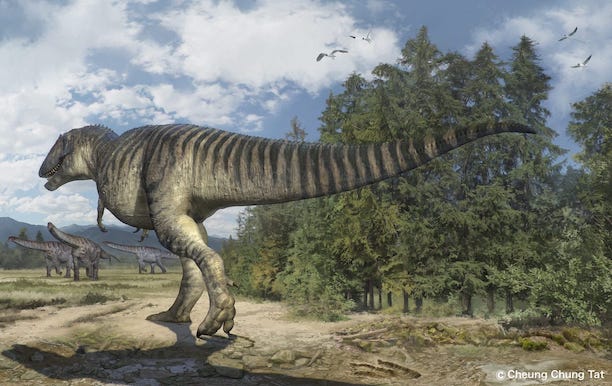
※Reconstruction illustration of Eubrontes nobitai.
In July 2021, the dinosaur footprint research team at China University of Geosciences published a paper on "Eubrontes nobitai," a new species of Early Cretaceous footprint fossil discovered in Sichuan Province, China.
The "nobitai" in the name derives from "Nobita" from "Doraemon."
This valuable fossil was discovered in Sichuan Province in July 2020.
After heavy rainfall hit Sichuan,
four footprints were found imprinted on an overturned slab-like rock.
After detailed research by Associate Professor Xing and his team at China University of Geosciences (Beijing),
the footprints were confirmed as a new species of carnivorous Eubrontes dinosaur.
The subsequent academic recognition led to this naming.
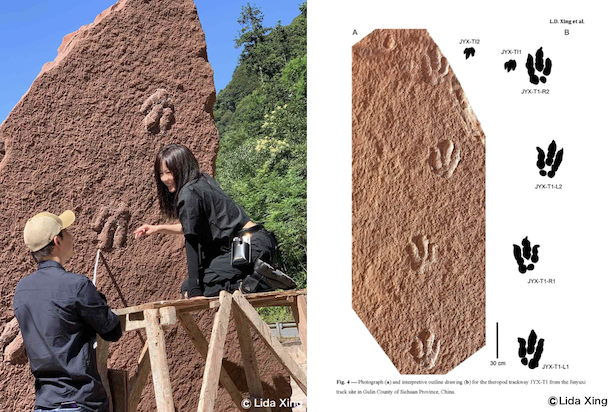
※Associate Professor Xing (left, wearing a hat) with the actual fossil.
Associate Professor Xing, born in 1982 (39 at the time), has been a lifelong "Doraemon" fan.
After watching "Doraemon the Movie Nobita's New Dinosaur" (released in China in December 2020; released in Japan in August 2020),
where Nobita names a new dinosaur species after himself, he decided to name this footprint after Nobita.
Scientific names typically follow Latin grammar rules, so "Nobita" received the human-name suffix "i,"
resulting in "Eubrontes nobitai."
The name "Eubrontes" originally came from Jurassic carnivorous dinosaur footprints discovered in Connecticut, USA,
meaning "true thunder." Features like bipedal walking and three-toed footprints with sharp claws characterize carnivorous dinosaurs.
"nobitai" is the first Eubrontes discovered in Cretaceous strata.
Nobitai was recognized as a new species due to its wider splay between the second and fourth toes compared to other Eubrontes,
a slightly outward-pointing middle toe, and broader foot shape.
Based on a foot length of about 31 cm, Nobitai is estimated to have been approximately 4 meters long,
walking the Earth during the Early Cretaceous period about 125 million years ago.
Since only footprints have been found for Eubrontes dinosaurs,
their full appearance remains unknown.
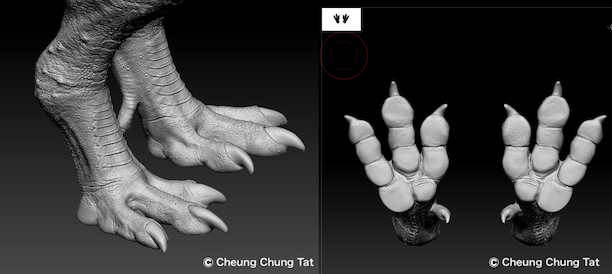
※CG reconstruction based on footprints.
Fujiko・F・Fujio, creator of "Doraemon," loved dinosaurs.
"Doraemon" stories frequently feature adventures in the dinosaur age using Gadgets.
The first "Doraemon's Long Tales" movie (1980) was "Nobita's Dinosaur,"
where Nobita raises a baby Futabasaurus and returns it to the Cretaceous period.
The farewell between "Pesuke" and Nobita moved many to tears.
The short story "Discovering Dinosaur Footprints" (Tentōmushi Comics Vol.44) depicts Nobita excited by fossil news,
attempting to leave footprints in the dinosaur era with Doraemon.
Many other "Doraemon" stories feature dinosaurs.
This naming honors Fujiko・F・Fujio's deep passion for dinosaurs.
From November 30, a replica of Nobitai's footprint fossil will be displayed at Tokyo's National Museum of Nature and Science.
※The replica will also be exhibited later at "Kawasaki City Fujiko・F・Fujio Museum."
Message from Associate Professor Xing:
Nobita and Doraemon hold immense significance for Chinese children.
"Doraemon" embodies imagination, curiosity, and kindness,
representing priceless childhood memories for me too.
I named this discovery after "Nobita" to express gratitude.
Thoughts from Dr. Manabu Manabe (Vice Director, National Museum of Nature and Science):
Nobitai being a carnivorous dinosaur's footprint might delight Nobita.
Imagining Nobitai's appearance from footprints makes us want to search for skeletal fossils—opening new dreams.
I hope this inspires future dinosaur or fossil footprint researchers among children.
A new species of carnivorous dinosaur footprint fossil was discovered in Sichuan Province, China, and the fossil was named "Nobita"!
Officially named "Eubrontes nobitai"!!
Why? How? This involves a long and profound connection between dinosaurs and "Doraemon"!
※Reconstruction illustration of Eubrontes nobitai.
In July 2021, the dinosaur footprint research team at China University of Geosciences published a paper on "Eubrontes nobitai," a new species of Early Cretaceous footprint fossil discovered in Sichuan Province, China.
The "nobitai" in the name derives from "Nobita" from "Doraemon."
This valuable fossil was discovered in Sichuan Province in July 2020.
After heavy rainfall hit Sichuan,
four footprints were found imprinted on an overturned slab-like rock.
After detailed research by Associate Professor Xing and his team at China University of Geosciences (Beijing),
the footprints were confirmed as a new species of carnivorous Eubrontes dinosaur.
The subsequent academic recognition led to this naming.
※Associate Professor Xing (left, wearing a hat) with the actual fossil.
Associate Professor Xing, born in 1982 (39 at the time), has been a lifelong "Doraemon" fan.
After watching "Doraemon the Movie Nobita's New Dinosaur" (released in China in December 2020; released in Japan in August 2020),
where Nobita names a new dinosaur species after himself, he decided to name this footprint after Nobita.
Scientific names typically follow Latin grammar rules, so "Nobita" received the human-name suffix "i,"
resulting in "Eubrontes nobitai."
The name "Eubrontes" originally came from Jurassic carnivorous dinosaur footprints discovered in Connecticut, USA,
meaning "true thunder." Features like bipedal walking and three-toed footprints with sharp claws characterize carnivorous dinosaurs.
"nobitai" is the first Eubrontes discovered in Cretaceous strata.
Nobitai was recognized as a new species due to its wider splay between the second and fourth toes compared to other Eubrontes,
a slightly outward-pointing middle toe, and broader foot shape.
Based on a foot length of about 31 cm, Nobitai is estimated to have been approximately 4 meters long,
walking the Earth during the Early Cretaceous period about 125 million years ago.
Since only footprints have been found for Eubrontes dinosaurs,
their full appearance remains unknown.
※CG reconstruction based on footprints.
Fujiko・F・Fujio, creator of "Doraemon," loved dinosaurs.
"Doraemon" stories frequently feature adventures in the dinosaur age using Gadgets.
The first "Doraemon's Long Tales" movie (1980) was "Nobita's Dinosaur,"
where Nobita raises a baby Futabasaurus and returns it to the Cretaceous period.
The farewell between "Pesuke" and Nobita moved many to tears.
The short story "Discovering Dinosaur Footprints" (Tentōmushi Comics Vol.44) depicts Nobita excited by fossil news,
attempting to leave footprints in the dinosaur era with Doraemon.
Many other "Doraemon" stories feature dinosaurs.
This naming honors Fujiko・F・Fujio's deep passion for dinosaurs.
From November 30, a replica of Nobitai's footprint fossil will be displayed at Tokyo's National Museum of Nature and Science.
※The replica will also be exhibited later at "Kawasaki City Fujiko・F・Fujio Museum."
Message from Associate Professor Xing:
Nobita and Doraemon hold immense significance for Chinese children.
"Doraemon" embodies imagination, curiosity, and kindness,
representing priceless childhood memories for me too.
I named this discovery after "Nobita" to express gratitude.
Thoughts from Dr. Manabu Manabe (Vice Director, National Museum of Nature and Science):
Nobitai being a carnivorous dinosaur's footprint might delight Nobita.
Imagining Nobitai's appearance from footprints makes us want to search for skeletal fossils—opening new dreams.
I hope this inspires future dinosaur or fossil footprint researchers among children.
